
On this page
The gym has a time perception problem. Somewhere along the way, a “real” workout became something that takes 75–90 minutes — warm-up, lifting, cardio, stretching, maybe a protein shake you blend in the parking lot.
If you can’t fit that, people tell themselves, why bother?
This is nonsense. And it’s keeping a lot of capable, busy people out of the gym.
The math actually works out fine
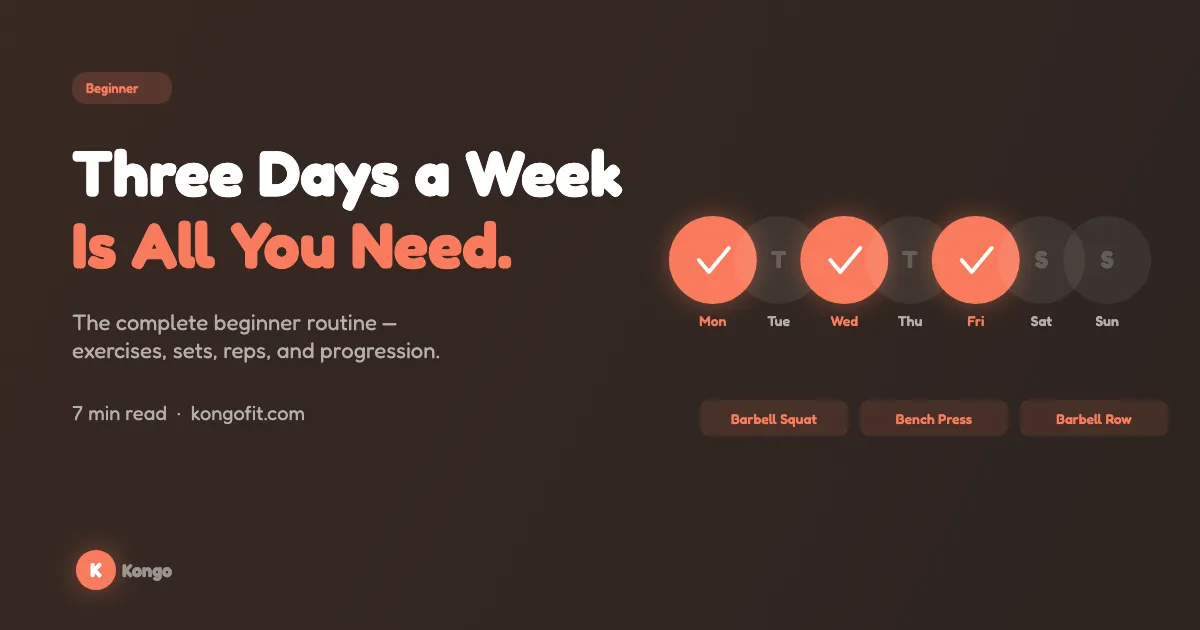
30 minutes, three times a week, is 90 minutes of training. That is plenty for most lifting goals — building strength, improving body composition, maintaining fitness through a busy season.
The research backs this up. A 2021 review on time-efficient training found that even a single set per exercise, three times a week, builds strength and muscle, especially if you’re new to lifting. More sets do get you more. But you get a lot from a little.
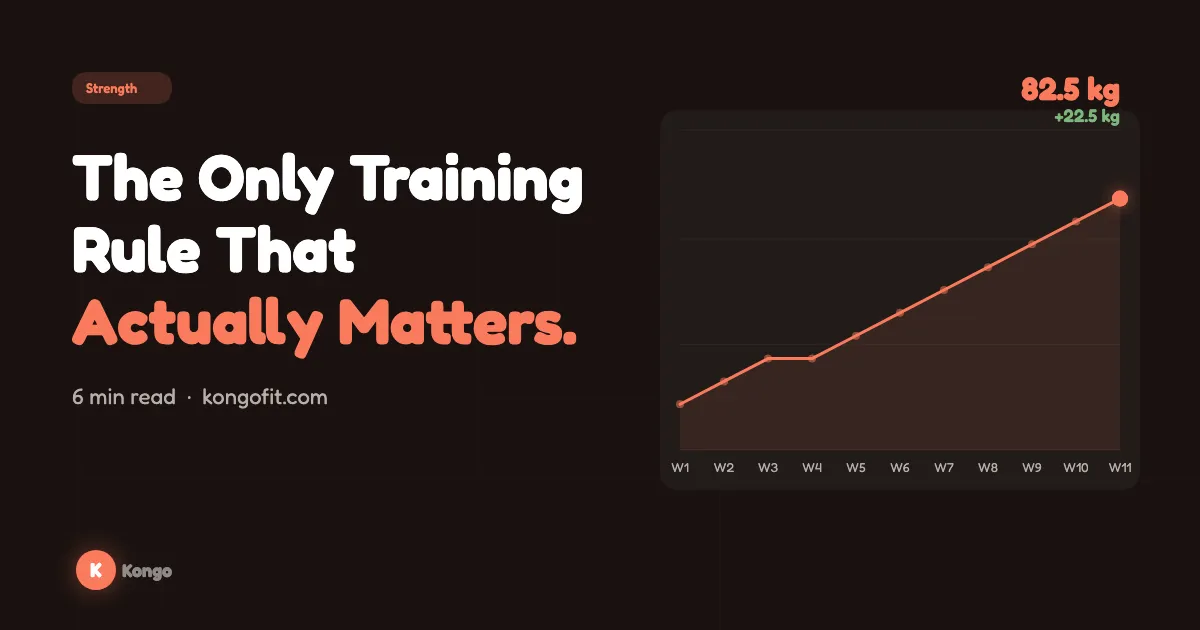
What matters most isn’t how long you train. It’s how consistently you train, and whether you’re progressively overloading over time.
What to do in 30 minutes
The key is compound movements — exercises that use multiple muscle groups simultaneously. The same review puts them first when time is short. You’re not going to do a chest day, a back day, and a leg day in separate 30-minute blocks. You’re going to do a full-body session with 4–5 exercises that cover everything.
A sample 30-minute session:
| Exercise | Sets | Reps |
|---|---|---|
| Squat (or Goblet Squat) | 3 | 8 |
| Push-up (or Bench Press) | 3 | 8–10 |
| Dumbbell Row | 3 each | 8 |
| Romanian Deadlift | 3 | 8 |
Rest 60–90 seconds between sets. That’s roughly 25–28 minutes with transitions. Done.
No isolation work. No supersets you have to think about. Just move through the compounds, rest, repeat.
The thing that kills short workouts
Indecision.
You get to the gym with 30 minutes and spend 10 deciding what to do. You check your phone. You adjust your playlist. You’re not sure if you should do squats or lunges. By the time you’ve started, you have 20 minutes and feel rushed, which makes the session worse, which makes you less likely to come back.
The fix is having the session already planned before you arrive. Ideally, every session.
The consistency advantage
Here’s the honest case for short workouts: they’re easier to keep.
A 30-minute session has almost no barrier to entry. You can fit it in a lunch break. You can do it before the kids wake up. You can do it tired, underfed, slightly grumpy. The friction is low enough that “I don’t feel like it” rarely wins.
Whereas the 90-minute session gets skipped whenever life gets in the way — which is often.
Three 30-minute sessions a week, consistently for a year, will do more for you than twelve 90-minute sessions spread across that same year because motivation came and went.
The best workout is the one you actually do.
Sources
- Iversen VM et al., “No Time to Lift? Designing Time-Efficient Training Programs for Strength and Hypertrophy: A Narrative Review,” Sports Medicine (2021). link

Log it, and Kongo does the remembering
Kongo is a gym tracker for iPhone and Apple Watch. It loads last session's weights, tells you when to add load, and keeps your streak honest. It's launching soon.